

In Practice
Your First Sober Event: How to Go (and Actually Enjoy It)
-by
Kevin Beerman
May 29, 2026

The problem with getting or staying sober is not that there's nothing to do without alcohol. It's that most of what gets suggested sounds vague or basic. At first, anyway.
"Take a walk." "Try yoga." "Read a book." "Go bowling." Sound familiar? These are some of the common suggestions you get when asking how to have a social life without drinking. And while none of them are wrong, they all miss what the question is actually about, which isn't merely what to do with your hands, but rather how to have a genuinely joyful, adult social life where alcohol isn't the connective tissue holding everything together.
The real problem isn't that you have no interests or hobbies. It's the reality that many adults meet, reconnect, and build friendships in settings that center drinking. Happy hours, bar nights, brunches where mimosas are the whole point, dinner parties where wine is the social lubricant. It’s not that you did all of these things because alcohol was present, it's that alcohol was doing a very specific job: giving people something to do with their hands, signaling relaxation, and lowering the stakes of conversation. Sometimes, alcohol provides a reason to show up at all.
Take it out of the picture, and suddenly the infrastructure is gone. The question then becomes: what fills that structural role?
What follows are social formats—specific kinds of experiences—that create the same energy, chemistry, and ease that alcohol used to manufacture, without alcohol being involved at all.
There's a meaningful difference between killing time and building community. A lot of sober-activity advice optimizes for the former. Crossword puzzles, solo hikes, and rearranging your furniture, while they can be enjoyable, are not stand-ins for social infrastructure.
Activities that satisfy that social component tend to share a few consistent features:
This one earns its spot because it works so consistently, no matter the activity or location.
Some examples: run clubs, CrossFit gyms, martial arts studios, rowing teams, cycling groups, yoga studios with a local community feel. What separates these activities from "just going to the gym" is the tangible sense of community present. A CrossFit gym or a dedicated running club tends to develop something that resembles a social scene: people who know each other's names, show up for each other's competitions, go for coffee & conversation after Saturday morning sessions.
The social mechanics here are excellent. You have a built-in activity that takes most of your attention. Conversation happens naturally before and after, and not as the point of the gathering. You build familiarity through repetition and gradual improvement. And the context (doing something physically challenging with others) creates a specific kind of bond that's hard to replicate in other settings.
How to find group fitness classes: Most running clubs are discoverable through local running stores, Meetup.com, or Facebook groups. CrossFit and martial arts gyms have their own walk-in structures. For cycling, local bike shops are the entry point. If you're new to any of these, just showing up consistently is more than enough. The community tends to absorb people who keep coming back.
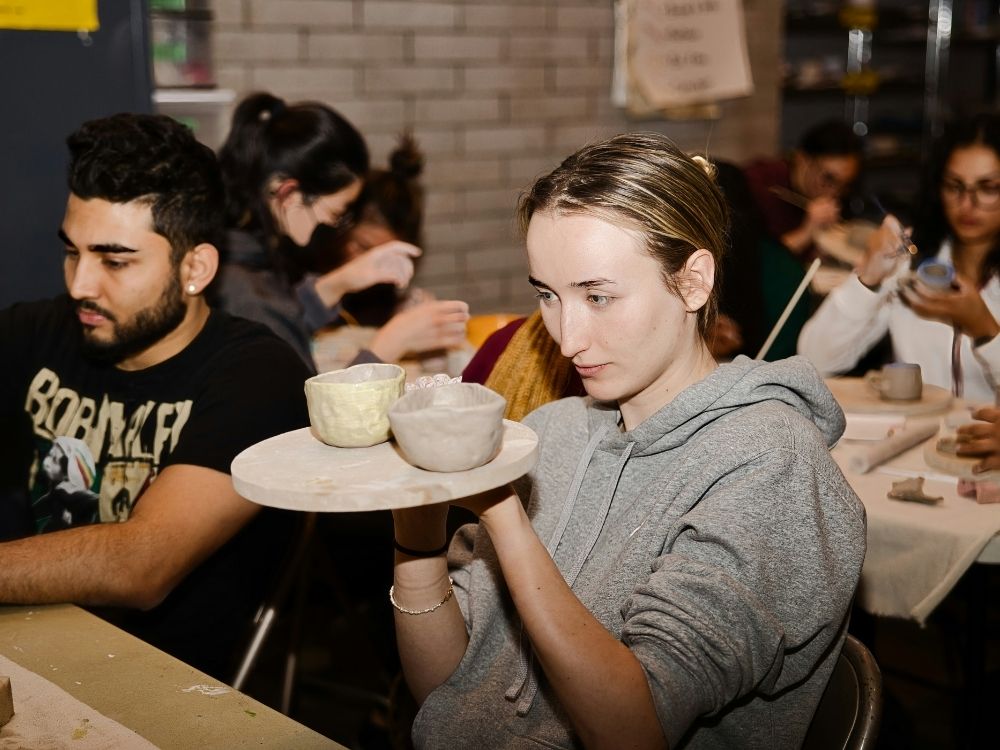
The key phrase here is recurring attendance. A one-time pottery class is a nice afternoon. The same pottery class every Thursday for six weeks is where you meet new friends.
What makes skills-based classes work socially is that they give everyone something to talk about aside from themselves. You're learning something new. You're failing at it in front of others. You're asking for help. You're comparing notes. The shared vulnerability of learning in public is actually a powerful social adhesive.
Activities with some of the strongest social return: improv classes, dance classes (especially partner dances like salsa, swing, or blues), pottery and ceramics, cooking classes that run as series rather than single sessions, and group art classes. All of these activities give the group a shared goal, prompted action, and space to let conversation breathe naturally.
A secondary benefit: skills-based classes tend to attract people who are intentionally interested in doing things, not just being out for the sake of it. In a formal class setting, you tend to find people there who are curious, interested in growth, and not purely focused on nightlife and partying.
Community colleges, local arts centers, dance studios, community recreation departments, and dedicated improv schools are great places to start. Pick a class, sign up, and find your people.
This sounds like a suggestion your guidance counselor would make, so let's be precise about why it actually works socially.
First: volunteering with a consistent commitment—same organization, same shift, same group of people—builds exactly the kind of low-stakes familiarity that's hard to manufacture otherwise. You don't have to be interesting. You don't have to perform. You just show up, do the thing, and familiarity accumulates over time. This is how adult friendships form in the absence of institutional settings like school, not through grand social moves, but through proximity and repetition.
Second: volunteering self-selects for a specific kind of person. Community food banks, habitat builds, literacy programs, animal shelters: these draw people who have decided to do something for someone else. That common value system does social work before anyone opens their mouth.
Third: it's one of the most alcohol-irrelevant settings available. Nobody's wondering whether to offer you a beer while you're sorting donations. The environment doesn't really carry any drinking norms at all.
How to find it: VolunteerMatch, Idealist, local food banks, Habitat for Humanity, animal rescue organizations, literacy coalitions, youth mentorship programs, and environmental groups. Most cities and suburbs have more options for volunteering than people realize.
The version of this that tends to work best: groups organized around a genuine interest where people are doing something together, not just talking about doing something. Book clubs where people actually discuss the book. Tabletop gaming nights with regular fixtures around the game table. Hiking groups that have a pre-planned trail agenda. Amateur radio operators. Beekeeping associations. The specificity matters. The more particular the interest, the more likely the group has real culture and conversation built in.
What makes interest-based groups uniquely valuable for sober social life is that they give you an identity framework that has nothing to do with your relationship to alcohol. You're the “person who's into urban photography” or historical fiction or competitive board games, etc. That's a much different center of gravity than "the person who doesn't drink." The latter is a subtraction. The former is an addition.
How to find it: Meetup.com can be genuinely useful. Facebook groups for local interests. Public library systems often have more going on than most people know.
A clarification upfront: this is not "watch a movie instead of going out." That's a solo activity with a social costume on.
What this is: live experiences where the crowd is part of the experience. Sporting events. Live music at a small venue. Comedy shows. Burlesque. Theater. Improv shows. Open mics. Poetry slams. Roller derby. Competitive trivia.
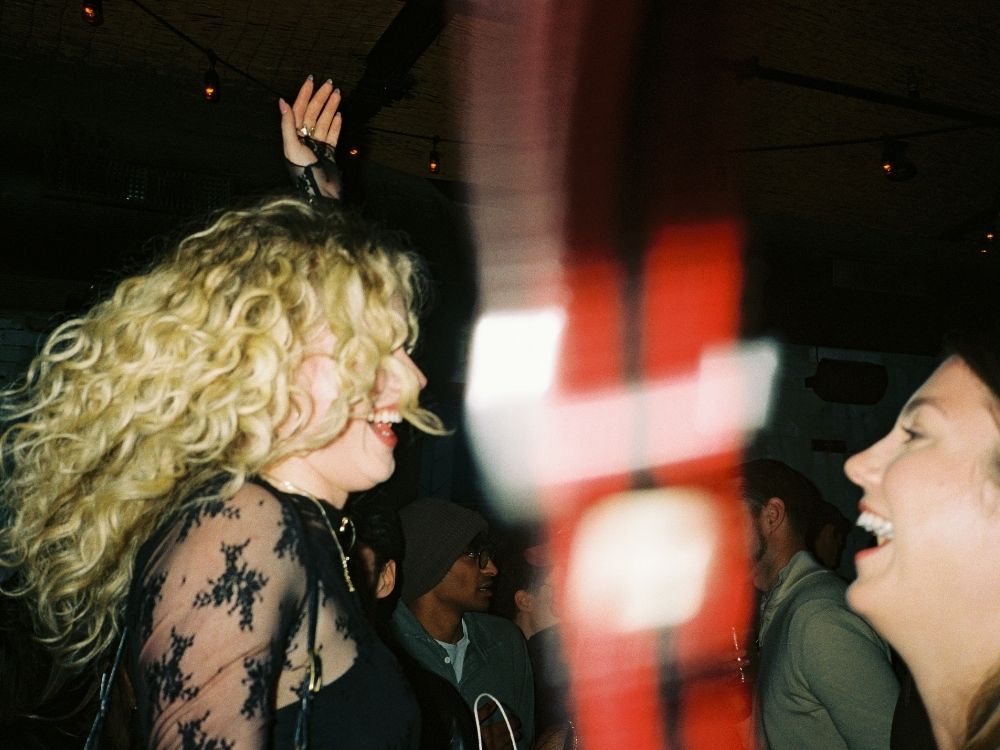
What these share is a social activation that doesn't require you to manufacture the energy in the room. The energy is already there, and you're simply joining it. There's something happening that gives everyone something to react to. You can go with a single friend and have a full, energizing evening without the pressure of constant conversation. And unlike bars, the activity isn't alcohol, but rather,the actual thing you came to see.
Small venues deserve a special highlight. A 200-person capacity club with a band you're excited about is a categorically different experience from a stadium concert. You're close to the action, surrounded by people who specifically came for this, and conversation happens naturally because you share an obvious common ground. Local scenes (whether that's jazz, punk, bluegrass, comedy, or experimental theater) tend to have regulars, and regulars tend to become people you recognize.
The sober advantage here is real: you will remember the show. You will have actual opinions about it. You will be available to have the conversation on the way home. That's not nothing. In fact, it’s everything.
How to find it: Your city's local alt-weekly (or its digital equivalent), venue websites and social accounts, Eventbrite. For sports, check for minor league options. They're often cheaper, easier to access, and in some ways more fun than major league events.
Finding individually satisfying activities is not the same as building a thriving social life. Activities are the entry points. The social life is what accumulates when you keep showing up to the same places, with the same people, over time.
This is the thing that alcohol-centered social life makes easy, because bars and parties are spaces where showing up repeatedly is normalized and expected. Building the equivalent without that infrastructure takes intention. You have to decide to go back. You have to be willing to be the person who shows up again before anyone really knows your name.
The payoff, though, is enormous. You end up with a social world that doesn't depend on any substance to function. The connections are based on actual things you have in common, real experiences you shared, and enjoyable conversations you remember. That's not a lesser version of social life. For most people who get there, it turns out to be a better one.
The hardest part isn't finding the activities. It's believing, before you've experienced it, that the version of yourself on the other side of the effort is worth the extra effort.
NewForm exists to help people build the connections that make recovery not just sustainable but genuinely worth living. Our community events and platform are designed for exactly this: sober social life that doesn't require anyone to explain themselves, settle for less, or treat fun as a consolation prize. If you're looking for your people, we'd like to help you find them.
Loneliness feeds addiction. Real connection interrupts it. More than 85 percent of NewForm members either quit or significantly reduce their substance use. That shift doesn't come from prescriptive lectures or shame. It comes from finding people who don’t just root for your growth—they grow alongside you.